THREE SOUTH PARK CLIPS
Today I played tennis with a liberal writer/historian who had never heard of South Park.
So that got me experimenting with You Tube etc.
Enjoy.
----- o -----
Today I played tennis with a liberal writer/historian who had never heard of South Park.
So that got me experimenting with You Tube etc.
Enjoy.
DATE
A pomegranate on the wall,
An orange juice bottle prominent
On the coffee table, his talk,
Of marijuana pancakes,
“Imagine,” he said, “pancakes!”
And on his head in curls
Brown hair, he spooned my first taste
Of halvah from a bright blue can.
© Copyright 2006 William Morrissey All Rights Reserved
Three of those four names were associated with relatives or cronies. I think both of my names packed double whammies. Once my mom cautioned me that there were two Williams out there, one my godfather, the other an uncle by marriage, who both thought I was named after them.
Joseph was my dad’s name. Michael was the unattached name. I think they chose it because it’s so normal and so strong.
We Catholics are supposed to be named after Catholic saints. Anyway, there was for me the idea that one’s name connected one to famous people in history with the same name.
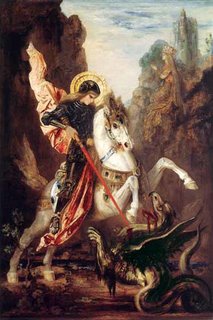
For instance, William the Conqueror, Saint George the dragonkiller, Michael the Archangel, Joseph and Mary.
Actually, the story of St Joseph, husband of Mary and stepfather to Jesus doesn’t sound like much fun. I wonder if poor St Joseph’s predicament has ever been used to satirize the Christ story.
But before him, another Joseph got a coat of many colors, and pissed his brothers way off. And he went to Egypt, too. [These poor Jews with asses and foot power made it to Egypt on a regular basis and our fucking president-to-be couldn’t hop a 707 to Europe. – P. Wilson.]

People tell me I look a little like William III, above.
What made me think of this was the heartbreaking picture of two young boys who went missing on a Native American reservation. The older one was four years old with big plump cheeks; his name was Tristin.
The first Google hit says it’s related to “Tristan,” the Arthurian knight of the Tristan and Isolde story, and it might have the word for “sad” as its root. They say it’s a boy’s and girl’s name.
I think that was a criterion for my folks: the name had to clearly indicate the sex of the child.
Then there’s the boy-named-Sue approach, or the ancestral approach which propagates Clarences and Sebastians and Aloysiuses. A name is something worth fighting for.
The second syllable of Sebastian is very harsh to an English speaker’s ear. And there aren’t good diminutives. And St Sebastian is the guy with all the arrows stuck in him so homoerotically.
One of the great names from the history of baseball is Tris Speaker.

The name Tristam didn’t get in the way of a lifetime .344 average. So I guess I’m full of shit.
One of the funniest things I ever said was at work in UCSF’s Accounting Office. A young, shy, first-generation Chinese American girl was very pregnant with her first child and would soon be on leave.
“Faye,” I said, “I’ll give you ten dollars if you’ll name your son “Bill.”
She had to think for awhile (to realize I was joking) before she smiled and shook her head, no.
“Ok,” I said, “a hundred dollars.”
It’s true, though, we’ll have a president named Barak, long before we ever have one named “Timothy,” or “Tristin.”
----- o -----
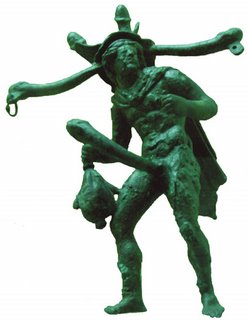
“It’s difficult to focus on the historic Sunni-Shia rivalry when you have a four-hour erection!
“You know,” Pud concluded, “ the Puritans’ witch-burning thing--not so much wrong, just futile.”
----- o -----
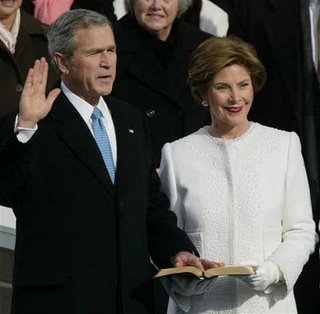
It’s disheartening to catch someone in a lie, not because of some moral outrage, but because it means that future statements by that person will require some scrutiny and verification, which is unwanted work.
So, Americans have seen demonstrated in recent months that leaders of major corporations lie, and can’t be trusted. Leaders of major religions, both traditional and emergent, are liars and can’t be trusted.
And our president and his administration, it’s finally dawning on the American people, actually did lie knowingly to justify an illegal, birdbrained invasion.
Thousands of humans killed and maimed.
Thousands of humans killed and maimed.
Rush Limbaugh admits lying about his views on political issues in order to “carry the water” of the Republican regime.
I know, ho-hum, gambling at Ricks… but what about the 50% of Americans who are of below average intelligence? They rely on smart people to help them figure things out. Tell them to go kill Iraqis, and they’ll actually do it. Lying to them is a sin.
They are bewildered. Who can they believe?
----- o -----
The old “power corrupts” saying tells us that even good people, once they acquire power, become corrupt.
The idea of term limits seems to be aimed at this problem.
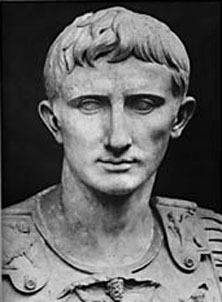
Cincinnatus is certainly an example of an uncorrupted power-wielder. He got in and out.
The image is of Chernobyl after the accident. Some workers volunteered to go in and accept death. But most, I think, went in for very brief stints, so that the radiation dose wouldn’t kill them.
Like D.C.

Possibly the final nail was the revelation that the leader of Bush’s Evangelical base was a closet gay drug abuser.
A few days before the election we were able to compare the integrity of Ted Haggard to the integrity of a (former) drug-involved gay prostitute. Mike Jones even admitted that he timed the revelation to affect the election (including anti-gay Colorado initiatives).
Even members of Haggard’s megachurch, have reportedly thanked Mr Jones for exposing a problem, for which the reverend can now get help.
Karl Rove mentions the Haggard scandal as one of the contributors to the rout. Most lefties are ignoring the exit polls regarding corruption. They say it’s Iraq, Iraq, Iraq.
But our invasion of Iraq is itself a scandal. We were lied to about the reasons for going into Iraq. We still haven’t been told the honest truth about that.
Their annual reports are lies. Their state of the union messages are lies. Their assignment of priests are based on lies. Their oaths of office are lies. Their sermons are lies.
And the media’s incredulity is a lie.
Nobody likes to be lied to, at least not about important things, for instance the safety of one’s life-savings, or the reason one’s son was sent to die in combat.
So, the Republicans were turned outof office, not because they are war criminals and torturers (which they are), or thieves (certainly) but because they’re such goddamned liars. How “quaint.”
----- o -----
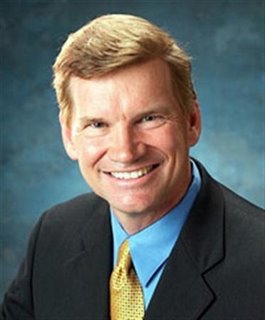
As an opponent of sex-fun in general and gay sex especially, Rev Ted Haggard is disgraced as a hypocrite.
Lost in this is his utter failure of pastoral duty.
When a Christian minister meets a prostitute, the minister’s response should be to help the prostitute find a better line of work, not to ask, “How much?”
The larger question for me is the dignity of sex work in general. Prostitution seems like a default source of income, when nothing else is available, and it beats dieing of starvation. But that’s probably not always the case
I think I wouldn’t enjoy having sex with people not of my choosing. But I can imagine how someone could find it more fun and rewarding than flipping burgers.
My mom used to say, “Young people think it’s all about sex. Gradually you learn that it’s really about power.”
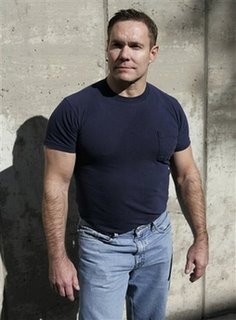
The reported male prostitute in Denver, Mike Jones (I used to know a Mike Jones), who reportedly has audio tapes of the minister, is probably a nice man with diverse interests who does prostitution as a sideline and could survive without it; at this moment he has a lot more power than the disgraced minister.
BTW: Reports say Mike is 49, and still selling it? You go, girl!
----- o -----
Pud was glad to see that PW Botha had finally died. “How do these evil fucks live so long?” he asks. Then answers himself, “Because they know what’s coming when they die.”

Pud was clearly overwhelmed by the idea of a flight to “South fucking Africa.”
“Maybe you don’t have to piss on Botha’s grave, Pud,” I suggested, “Maybe this obituary from the Guardian does the job for you. Check it out.”
PW BOTHA
Dan van der Vat
Thursday November 2, 2006
The Guardian
PW Botha, who has died aged 90, ruled South Africa under apartheid for 11 years until 1989, and was gradually exposed during his long decline as one of the most evil men of the 20th century, committed to state terrorism, war and murder to thwart black majority rule.
Pud seemed genuinely relieved. “Thanks,” he said, “I can’t tell you what a good feeling it gives me to read that.”
----- o -----
I've created a list of previous posts on this blog. For now it has only dates and titles. To access this list, click the INDEX link in the right sidebar.
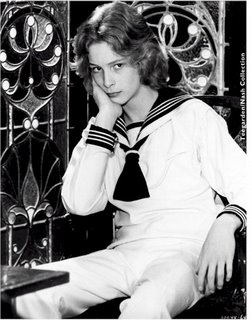
When I first read the book and then saw the movie, I was a coming-out-gay leftist English lit major. I saw the moral of the story as simple, and comic: Fuck when you’re young—don’t become a pathetic old man following young boys through the streets.
Now, after thirty years of not thinking much about it, I have to agree with my earlier assessment It’s a simple cautionary tale regarding age-appropriateness. Aschenbach’s predicament in Venice balances the inappropriate choices he made in childhood.
Rather than pursue pleasure in play and companionship in his youth, activities for which he felt inadequate, Aschenbach became a loner and grinder, achieving academic excellence not though brilliance but by dull lead-assedness. His literary achievement, Mann tells us, was substantial but mediocre. The only thing notable in his style was impeccableness, as opposed to, say, verve.
So, in his sixties, when vague impulses draw him to a vacation alone in Venice, he sees and develops a crush on a fourteen year old boy. The overwhelming effect on Aschenbach makes him think that there is something very special about the boy, Tadzio. Aschenbach gushes, mentally, just like an adolescent girl with her first major crush, on “the most beautiful boy in the world.” Tadzio “rises godlike” from the waves of the Adriatic.
There is nothing wrong about this experience and response, we’ve all gone through it, but it’s supposed to happen around age 13 or 14 or 15, not 62. By the time a man reaches his sixties, he should know that the response, “that’s the most beautiful (boy, girl, man, woman) in the world,” is common and fleeting.
The climax of the story comes when Aschenbach utters the words, regarding but not to Tadzio, “I love you.” And, Aschenbach knows, the words are completely appropriate, except they’re uttered fifty or so years too late.
Aschenbach dies, never having touched or even spoken to Tadzio. There is a kind of perfection in this, that could be called tragic. It’s like the lovers on Keat’s Grecian Urn who will always love but never kiss, and never, presumably, smell each other’s farts.
The inability or failure to form a relationship with a perfectly beautiful person can be thought tragic. But consider the disappointment consequent to actually forming such a relationship. I think of the serious young doctor marrying the mayor’s daughter, “a perfection of blondness,” in Middlemarch.
The young doctor found that sexual possession of a beautiful object was entirely possible, but that while being perhaps a necessary condition for happiness, it was certainly not sufficient.
The human species is so successful due at least in part to it’s extraordinary sex drive. A human male, when it comes right down to it, will fuck almost anything. Human females love their offspring beyond all else.
Human sex drive is so strong it crushes us. Aschenbach thought he could avoid it entirely. But Eros’ due could not be denied. Aschenbach paid his debt in Venice.
BTW: In the stage presentation, the actor would shift into the voices of those with whom Aschenbach interacted. I realized that throughout the story Aschenbach talks only with members of the serving classes or occupations—gondoliers, hotel managers, barbers, travel agents, etc. He never speaks with a peer. And he never speaks, or is directly acknowledged by Tadzio, except by glances, never, say, a head nod. This seems odd to me.
The story makes more sense if we assume that Aschenbach is felled by a stroke or something, back in Munich when he encounters the red-haired man with the rucksack, from which he never regains consciousness. The trip to Venice is Aschenbach’s deathbed dream.
TRADE IN D.C.
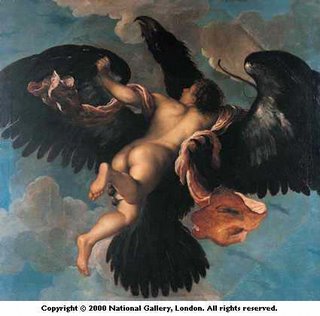
In his first throes of love, Aschenbach tries to think what kind of relationship he could possibly form with Tadzio, and he considers two paradigms from Greece, Zeus’ “rape” of Ganymede, and Socrates’ relationship with Phaido.

The most pathetic line in the revealed communications is Foley asking a page, “do I turn you on?” And the page replies, “a little.” Hey, Mark, if you have to ask, the answer is “no.” Foley has been mocked by comparison to Austin Powers sticking out his plaid-polyester-clad butt to his lovely costar and asking her if that turns her on.
Needless to say, this is not a question Zeus would ever pose to Ganymede, nor Socrates to Phaido.